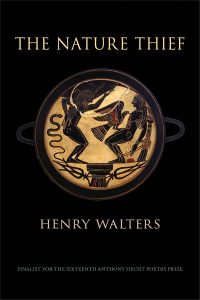
Joseph Harrison, Identity Theft


104 pp, ISBN 978-1-904130-29-1, £10.99 / $22.00 (Hardback), US Publication April 2008 / UK publication July 2008

104 pp, Paperback ISBN 978-1-904130-27-7, £7.99 / $15.95 (Paperback), US Publication, April 2008 / UK publication June 2008


Post-free for on-line credit/debit card orders


I wish to order this book


A note about Identity Theft

The poems in Joseph Harrison’s second collection, Identity Theft, map the erosions and betrayals of selfhood, both cyberspace-age and age-old. If the high-speed title poem and the other menacing “Trajectories” of the book’s first section register the disintegration of identity under contemporary pressures, social and technological, the focus of the book’s second sequence, “Odes and Elegies,” is more personal and retrospective, dealing with the curtailment of identity by loss and encroaching mortality. The third section’s “Tropes” suggest that language and art, which might seem to hold the promise of preserving something of the self, transform those who use them beyond recognition, while some of the final section’s “Odes” put our current identity crisis in a longer historical perspective. Identity Theft pursues these concerns through poems in a variety of forms, displaying a range of scale, tone, and subject, poems that are funny yet serious, informed by the past but fully present, both idiosyncratic and resonant.


A note on Joseph Harrison

Joseph Harrison was born in Richmond, Virginia, grew up in Virginia and Alabama, and studied at Yale and Johns Hopkins. His book Someone Else’s Name (Waywiser, 2003) was named as one of five poetry books of the year by the Washington Post and was a finalist for the Poets’ Prize. His poems have appeared in The Best American Poetry 1998 (ed. John Hollander), 180 More Extraordinary Poems for Every Day (ed. Billy Collins), The Library of America’s Anthology of American Religious Poems (ed. Harold Bloom), and many journals. In 2005 he was the recipient of an Academy Award in Literature from the American Academy of Arts and Letters. He lives in Baltimore.


Praise for Identity Theft

“Joseph Harrison’s new volume is a wonderful leap in his poetic development. Harrison fuses formal control with a rich interiority and composes many poems that deserve to become canonical.” – Harold Bloom

“How deeply satisfying it is to read a poet whose meditative, elegiac temperament is married happily to verbal wit, even laugh-out-loud humor. Joseph Harrison is that rare poet, one whose command of craft suits him equally to produce a two-line ‘Ode’ (‘O elevated visionary thoughts, / Where are you now?’) and a ten-page public poem (‘To George Washington in Baltimore’) on that American giant who understood the ‘human scale.’ A poet so giddy with wordplay that he dares to rhyme ‘my palm is piloted’ with ‘Pontius Pilated’ and ‘pirated,’ Harrison addresses nonetheless the most serious concerns. Wary of our technology-dominated present and future, in which ‘identity theft’ is no joke (and ‘what fave new world is beckoning?’), Harrison makes his fingerprint evident in all of these poems – an implicit affirmation of something unique in each of us.” – Mary Jo Salter

“The title poem of Joseph Harrison’s second book is a witty and headlong discussion of how one’s self, if any, is constituted. We are a patchwork, it develops, and the same might be said of Harrison’s book, which makes continual and expert use of Spenser, Wordsworth, Horace, Villon, and other predecessors. If this makes Identity Theft seem a three-ring circus, the important point is that Harrison is a superlative ringmaster: his book throughout is governed by that playfulness and performance which, as Frost said, are required in poetry however impassioned or serious. I found myself particularly moved by ‘Who They Were,’ which recalls the poet’s mother and father in the stanza of Tennyson’s ‘In Memoriam’.” – Richard Wilbur


From Identity Theft


To an Aldabran Tortoise, Dead at 250


            The races of the swift,
            Who swiftly come and go
Like fads or pop stars, trending out of sight
Almost before we see them, given their gift
            For getting something right
            For fifteen minutes or so,
The one-hit wonders, overnight sensations,
            Pet Rocks and Salad Shooters,
Or former latest software innovations
            For Pleistocene computers,

            Seem briefer next to you,
            Known as “the only one,”
Adwaitya, oldest sentient thing alive
By eighty years or more, a tortoise who
            Was once the pet of Clive
            Of India. That sun
Set eons since, through veils of saffron dye
            And wafture of a fan,
And while you cast a cold chelonian eye
            On many a vanished man.

            (Not least that lapsed grandee,
            The prototypical
Nabob and potentate, big gun for hire
To profit the East India Company,
            That junkie, thief, and liar
            Who “owned” you, whose steep fall,
Spectacularly public, stunned the nation,
            Who did confess, when tried,
Astonishment at his own moderation,
            Ending a suicide.)

            Now you, whose lifespan spanned
            Mozart and Bird and Cage,
Wordsworth and Motherwell, Turner and Kees,
Plus Kean and Keaton, Kierkegaard and Rand,
            Forests of old-growth trees,
            The whole Industrial Age,
Isms galore, old worlds and new world orders,
            Epochs and epistemes,
Innumerable maps redrawing borders
            For botched colonial schemes,

            Antediluvian,
            Lugging your great domed shell
For centuries, have crossed the finish line
Alone, one of a kind. Small things began
            Your terminal decline:
            For months you’d not been well;
A crack in your armor festered, gnawed by rats;
            Your liver failed; you, too,
Succumbed to time, with no more caveats,
            Dead at the Alipore Zoo.

            Still your trajectory,
            From coralline atoll
To editorial encomia
Upon your death, implies a larger story,
            Of how you came to be a
            Star of sorts, in the role
Of figure for time itself, through silent, sheer
            Endurance of life’s stages
On a vast, sidereal scale, year after year
            Bridging the distant ages.

            We fight, we cry, we laugh:
            You turn your head and blink
And we are gone. Or were. For now you are
No longer our living, breathing chronograph,
            Or Vishnu’s avatar
            (The second one, I think),
“Kurma,” the tortoise, sent to earth to plumb
            The bottom of the ocean
For what we’ve lost. The cold depths. Cthonic. Dumb.
            A whole world in slow motion.


To the Republic


What have we done, who once were hailed
Protectors of humanity
And celebrated where we sailed,
Whose freedom set the ages free
To scheme what better states could be?
We’re symbols of a deadlier sort,
Bullies despised for cruelty,
And I remain despairing of the port.

We should have known what war entailed.
Our fool imperial fantasy
Tried to command the world, and failed.
The consequences we now see:
Explosions of pure misery,
With half a million lives cut short
By death throes of democracy,
And I remain despairing of the port.

Where were the leaders who should have railed
Against such blatant idiocy
Before we launched this shit? They bailed.
Torture and illegality
Have turned our country’s policy.
To import oil, we must export
American hypocrisy,
And I remain despairing of the port.

The winds grow violent. History
Breaks empires on the rocks, for sport.
Our sails are rent, we’re lost, at sea,
And I remain despairing of the port.


©


Home PagePoetryOrderingNewsCredits
The PressFictionTradeEventsLinks
Contact UsNon-FictionRightsMailing ListVacancies
ImprintsIllustratedPermissionsSubmissionsSearch

The Anthony Hecht Poetry Prize